
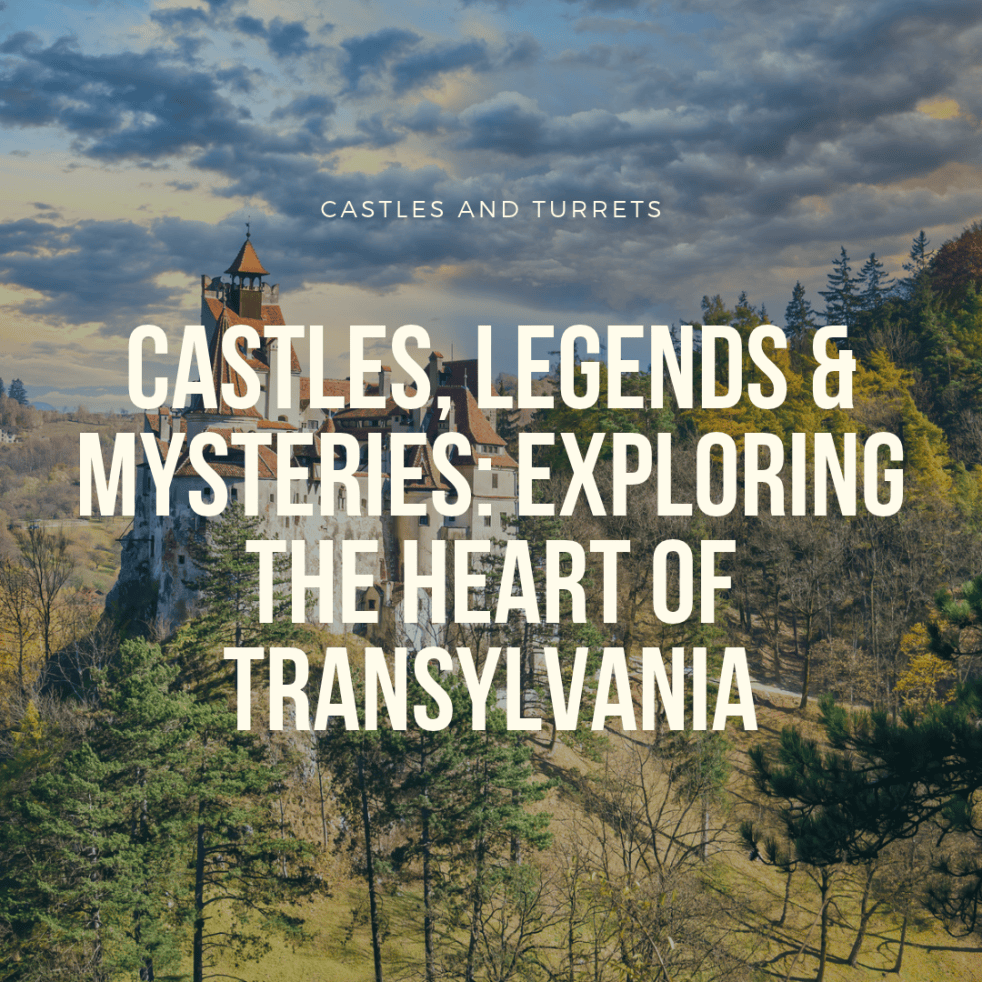
There are many famous castles all over the world, whether that is Edinburgh Castle in Scotland, Pena Palace in Portugal or Himeji Castle in Japan; they are not only astounding wonders to look at but also hold thousands of years of history which take you through centuries of royals and battles. However, out of all of the famous castles, none are as iconic as the castles of Romania. Entrenched in centuries of folklore, tales and cinema, Transylvania in Romania is renowned for its connections to the supernatural, with iconic characters such as Dracula supposedly residing and originating in the region.
Paired with the beautiful Romanian architecture and rich folklore, the Transylvania region, cradled by the Carpathian Mountains, is famed for its medieval stone fortresses, Gothic spires, and centuries-old folklore, which are a must-see whether you’re a castle fanatic like us or just want to see some seriously awe-inspiring architecture and learn about the local history.
So, if you want to explore the legends, mysteries and castles that are at the heart of Romania’s history in the region of Transylvania, read on and explore its towering turrets.
Bran Castle, Dracula’s Castle
The most famous of all the castles in the region and the apparent home of the infamous Vlad the Impaler, who inspired the Dracula character, Bran Castle was completed around 1388 in the Saxon era by King Louis of Hungary. Sitting on the rocky cliffs on the edge of Transylvania and Wallachia, this impressive structure was built as part of military defence against the Ottoman Empire. But where does Dracula fit into this?
Well, Bran Castle, or Dracula’s castle, is largely fictional, with the author of the books never even visiting the castle. However, the inspiration for the Dracula story is thought to have lived there or, most likely, been imprisoned in the castle. Despite this, the structure remains impressive, with turrets towering above the landscape, and millions of visitors come every year to explore its ancient grounds, including its secret passage, royal residency, and amazing views of the surrounding forest.
This is a must-visit when in the area, not just for its impressive structure, but also to learn about local folklore, especially the belief that vampires and staked bodies kept them from coming back to life.
Peles castle
Located in the royal domain of Sinaia, alongside a historic medieval route connecting Transylvania and Wallachia, this more modern castle was completed in 1883, commissioned by King Carol of Romania. What’s special about this castle is that it is the first of its kind in Europe to have its own on-site hydroelectricity plant, featuring central heating, lift and central vacuum system. This is a marvel of engineering and modern technology from the minds of architects in the 19th century, with features such as central heating, sitting alongside around 170 rooms and bedrooms and even a theatre, making it one of the most unique and impressive castles in the world.
Unlike brams castle, this castle has less history in the spooky and occult folklore but has more roots in the Romanian royals and communist history, as the castle acted as the summer home for the Romanian royal family from 1883 until 1947, until it was taken over, turned into a museum, and closed under Nicolae Ceaușescu’s reign. Nowadays, it has been reopened, restored and is open to the public for visiting.
Corvin castle
Corvin Castle, also known as Hunyadi Castle, is one of the largest Gothic-Renaissance fortresses in Europe and is one of the seven wonders of Romania. Beginning as a small stone plot, the estate was gifted to the father of the military leader John Hunyadi, who transformed the small plot into a military fortress, which was later further transformed in the 18th century, giving it its signature Gothic look.
The castle’s iconic red-roofed towers, massive drawbridge, the knights’ hall and the diet hall have made it a media and cultural landmark for films such as The Nun, Dragon Heart and the Nosferatu film, perfect for any film fans who are visiting the region. Its early history is also culturally significant as a prison for the infamous Vlad the Impaler, who may or may not have been there for years.
Ignoring the castle’s history, visually the castle is a picture-perfect castle with this impressive drawbridge over a moat surrounding the castle, and huge turrets. Almost as tall as the castle itself. Inside, it features grand ceremonial halls and Gothic arches.
Final thoughts
Whether you’re visiting one or all of these castles, whether you’re going on a quick holiday adventure or a longer trip around Europe whilst remotely working as a phone answering service or customer support, these castles are guaranteed to make you say wow! So, why not make a trip to Transylvania and explore some of the best castles in the world!

