

Morocco, the “Land of the Setting Sun,” beckons travelers with its vibrant culture, bustling souks, majestic landscapes and beautiful sun that you don’t get here in the UK. They are a place that embodies and showcases that wild beauty of maximalism, which personally is something I aim for. It’s a place full of wonderful people and bright colours. I see the appeal of coming here from every single angle. While Marrakech’s riads and Fes’ labyrinthine medina hold undeniable charm, a whole other Morocco is waiting to be discovered that is beyond the Instagram pictures and the true core of Morocco. This adventure delves beyond the tourist trail, unveiling hidden gems steeped in fascinating history.
Journey to the South: Where Gladiators Once Trod

Venture south to Volubilis, a UNESCO World Heritage Site dating back to the 3rd century BCE that, during these times, was inhabited for centuries. These remarkably preserved Roman ruins were once the thriving city of Walili, a vital outpost of the Roman Empire. Have you seen that viral post that says men tend to think about the Romans at least once a day? Well, after this, they won’t stop thinking about them after visiting Volubilis.
You will be transported to those films, like Troy and Gladiators, standing on top where warriors once fought, which is just mind blowing. These ancient ruins are merely a glimpse into the rich history of Morocco. You can embark on your journey by visiting places and what is left of grand structures such as the intricate mosaics, arches and well-preserved buildings that were once called home to Romans. It should be on your list for both history and film lovers when traveling around Morocco.
Kasbah Telouet: A Mud Palace Hiding a Glaoui Legacy

Nestled in the heart of the Ouarzazate Valley lies Kasbah Telouet, a 17th-century mudbrick fortress and another World Heritage Site. This former seat of the powerful Glaoui tribe offers a glimpse into a bygone era and is now a crumbling yet still fascinatingly beautiful village that is pouring with historical significance and Moroccan independence.
A Sultan oversaw Morocco under the machine, the country’s pre-1957 feudal system, while a group of Pashas, or dukes, maintained local authority by enforcing laws and maintaining order. Thami El Glaoui dubbed the “Lord of the Atlas,” was one of Morocco’s most influential pashas in the 20th century. The El Glaoui family held strong connections with the Sultan and had governed Kasbah Telouet since its establishment in 1860. Additionally, Thami held the position of Pasha of Marrakech from 1912 until 1956. You could say this was the Great Gatsby of Morocco; as you can tell, I love a film reference. This is just a glimpse into Kasbah Telouet’s history and there is so much more to this beautiful place.
You could learn a lot more about both the rise and fall of the Glaoui family during a tour or explore the maze-like Kasbah, adorned with intricate stucco work and colourful stained glass.
Tafraoute: The Painted Rocks

Located right in the heart of the Anti-Atlas Mountains, Tafraoute is a place you need to keep in your destination book, known all over the world for its unique rock formations and artistic flair that just open your eyes up to the beauty of the natural and human touch.
This region is characterised by large boulders and rock outcrops; some have been decorated with colourful plains and striking artwork that leaves you mesmerised. Another reflection on the maximalist beauty that Morocco has to offer. If you are really into bouldering or rock climbing, consider having some fun near this location and enjoying some sport-like fun while basking in the beauty around you, painted by artist Jean Verame.
Tara Foute is also home to more creative and artistic characteristics that those who appreciate this could truly enjoy and it is a place you should indulge yourself in if you happen to travel around Morocco.
Moulay Idriss: The Sacred City

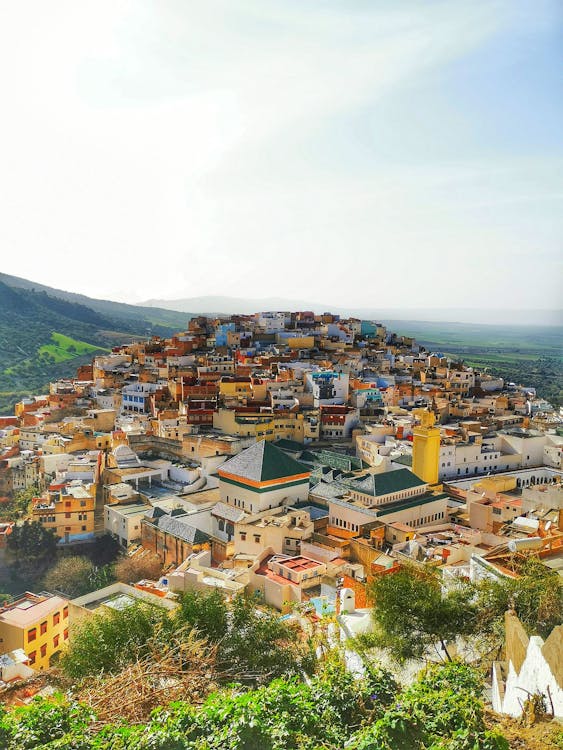
In Moroccan history and culture, Moulay Idriss, a holy city in the country’s north, is revered. Because of its connection to Moulay Idriss I, the founder of the Idrisid dynasty and a highly revered religious figure, it is regarded as the holiest Islamic site in Morocco. The town, which is perched on a hillside, provides breathtaking sweeping views of the surrounding landscape as well as the Volubilis Roman ruins.
Moulay Idriss has a traditional Moroccan charm due to its narrow, winding streets and white-washed buildings. Tourists and pilgrims arrive to pay their respects at Moulay Idriss I’s tomb and to take in the town’s mystical aura. In addition to its religious significance, Moulay Idriss provides insight into Morocco’s illustrious past and provides a claiming, peaceful and authentic Moroccan experience.
Final Thought
When it comes to traveling around Morocco, you will not be disappointed from all angles, whether you are going for the culture, history, natural beauty or the sun and sky. So be sure to leave your men’s full tracksuits at home and strictly pack shorts and your light colours when traveling around Morocco.
 CastlesandTurrets


2 thoughts on “Beyond the Tourist Trail: Unveiling the Hidden Gems of Morocco”